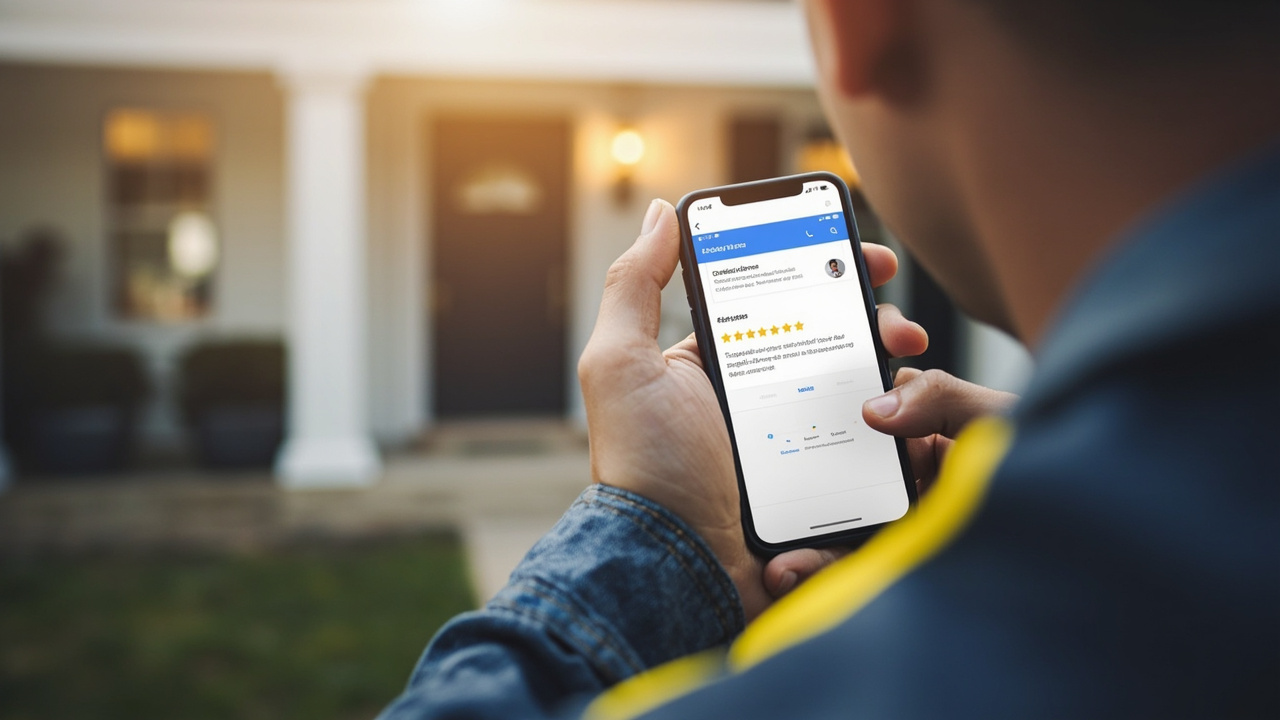
Your Google Business Profile reviews might be your most valuable local marketing asset. They show up in search results, influence whether someone calls you or your competitor, and are a deciding factor for home service customers who are comparing options. That is why when Google changes its review policies, it matters for your business in ways that go beyond compliance.
On February 23, 2026, Google updated its Google Business Profile review policies with new language that makes enforcement more automated and more immediate than before. The changes specifically target tactics that have been standard practice for a large portion of HVAC, plumbing, and other home service contractors. If your review generation strategy was built around any of those tactics, your profile is at risk right now.
What Google Actually Changed on February 23, 2026
Google has always had review policies. What changed in February 2026 is the specificity of the language and the shift toward automated pattern detection rather than manual review enforcement.
The core updates that matter most for home service businesses:
Explicit ban on incentives. Google now clearly prohibits offering payment, discounts, free goods, or any other incentive in exchange for a review, or in exchange for changing or removing a negative review. This language was always implied, but the 2026 update makes it explicit and flags automated detection for coordinated incentive patterns.
No more selective review requests. Businesses can no longer selectively ask only happy customers to leave reviews. Your review request process needs to go to every customer, not just the ones you know had a good experience.
On-premises pressure is now explicitly flagged. Google now explicitly warns against pressuring people to leave a rating while they are on your premises. Staff who ask customers to "leave us a review before you go" are now operating in direct violation of the updated policy.
Pattern detection replaces manual flagging. Google added language specifically targeting unusual volumes or patterns of review activity. If your review velocity changes suddenly after a review campaign, automated systems will flag it. Review gates, bulk SMS campaigns with incentive language, and receipt coupon programs all create the kind of coordinated pattern that these systems are designed to detect.
- Incentivized reviews (discounts, free services, payments) are now explicitly banned
- Selective review requests (only happy customers) are now a policy violation
- On-premises pressure to leave reviews is explicitly flagged
- Automated pattern detection now monitors for coordinated review activity
- Enforcement is faster and less dependent on manual review
The Exact Tactics Now in the Danger Zone
Here is where it gets uncomfortable for a lot of contractors. Many of the tactics below have been standard recommendation from marketing agencies for years. They are now in the danger zone after the February 2026 update.
Review gates
A review gate is a SMS or email sequence that sends a customer to a review platform only if they indicate satisfaction. If they click "not satisfied," they go to a feedback form instead of a public review site. Google has now explicitly flagged this as a form of selective review solicitation. If your review gate routes unhappy customers away from public reviews, this is a policy risk.
Receipt or invoice review incentives
Offering a discount, a coupon, or a gift card in exchange for leaving a review has always been risky. The 2026 update makes it an explicit ban, not just a best-practice recommendation. Any current program that ties a review to a discount or perk needs to be stopped.
Staff scripts that push specific ratings
If your office staff or field technicians are trained to say things like "We really appreciate five-star reviews" or "We depend on great ratings to serve you better," that is implied pressure for a specific rating. The new language specifically flags this. Staff should either make no rating reference at all, or keep the language completely neutral.
Review request campaigns that create velocity spikes
If you send a review request to 200 customers in a week after a slow period of reviews, that velocity spike can trigger automated detection. Google's systems are looking for the kind of sudden, coordinated activity that suggests manipulation rather than organic accumulation.
QR code signage with incentive language
QR codes at the job site or on invoices that link to a review page with any mention of "support us" or "we appreciate your feedback" in a context that implies a rating expectation are increasingly flagged. Keep QR review links completely neutral.
What Compliant Review Generation Looks Like
The good news is that systematic, compliant review generation is absolutely possible. The 2026 policy changes do not mean you should stop asking for reviews. They mean you need to change how you ask.
Send to every customer, every time
The 2026 policy explicitly prohibits selective solicitation. The simplest way to stay compliant is to send review requests to every customer after every job, regardless of how the job went. This creates an organic, consistent velocity that is also the most defensible under automated pattern detection.
Keep the language completely neutral
Your review request should not mention stars, ratings, or any implication of what you hope the customer will write. A request like "We would love your feedback on how we did today" is compliant. "We appreciate your five-star support" is not.
Separate customer recovery from review requests
If a customer has a complaint, handle that conversation entirely separately from any review request. Do not tie a resolution to an edit of their rating or a request to update a review after you resolved their issue. Google flags this pattern specifically.
Use a systematic, ongoing cadence
A gradual, consistent flow of reviews is more sustainable and less risky than bursts of activity. Automated systems that send review requests after every job, to every customer, without exception, produce the kind of consistent velocity that looks organic to Google's detection systems.
Respond to every review publicly and promptly
Google rewards businesses that engage with their reviews, both positive and negative. Responding to reviews also signals an active, maintained profile, which is a positive trust signal for both Google's algorithm and for potential customers reading your reviews.
Non-compliant: "We would really appreciate it if you could take a moment to rate us five stars on Google. Your support means so much to our small business!"
Compliant: "We would love your feedback on your experience with us today. Your input helps us continue to improve our service."
The difference is subtle but significant. One implies a rating expectation; the other is a genuine, neutral request for feedback.
You can flag suspicious reviews through Google Business Profile, but enforcement timelines vary. Focus on your own review process first. Using compliant tactics and building a systematic review volume is more durable than hoping competitors get caught.
It depends on the tool and how it is configured. SMS review requests that send the same neutral message to every customer after every job are generally safe. The risk comes from requests that mention incentives, tie review requests to customer recovery conversations, or use language that implies a specific star rating. Review your current SMS templates with your tool provider to confirm they are policy compliant.
You can appeal through Google Business Profile, but appeal timing is slow and outcomes are inconsistent. Prevention is far better than cure. Audit your current review generation tactics, switch to compliant neutral requests, and build volume through systematic execution rather than incentive-driven bursts. A gradual, compliant review flow is more sustainable than a high-velocity approach that triggers automated enforcement.