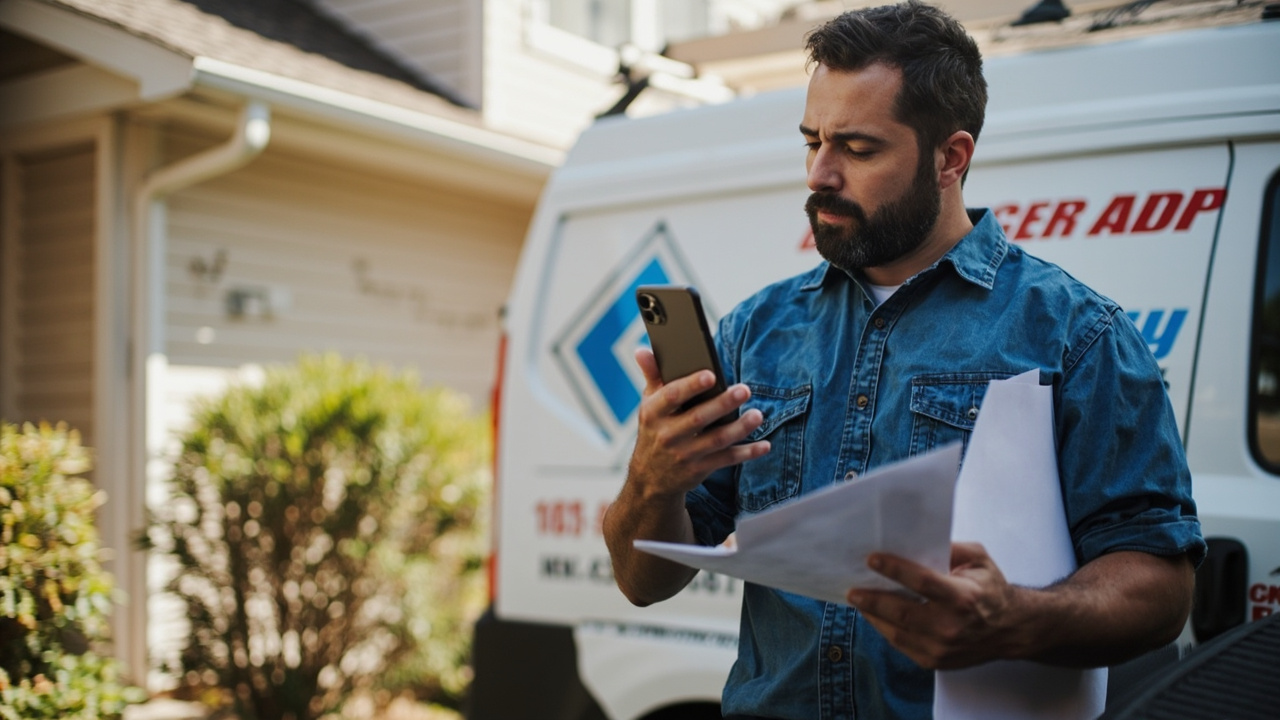
You showed up on time. You gave a thorough estimate. You walked the customer through the work, answered all their questions, and left a fair price. Then you never heard from them again.
No call. No text. No booking.
Sound familiar? You are not alone. Across the home services trades, contractors report the same story. The estimates they are most proud of are also the ones that go unanswered. And the silence is not a reflection of your price, your work, or your professionalism. It is a structural problem that most contractors never fix because they do not know it exists.
Here is what is actually happening: the average home services contractor loses 30 to 40 percent of estimate opportunities to follow-up silence. That is not a marketing problem. That is not a pricing problem. That is an operations problem hiding inside your sales pipeline. And the fix is not a better sales pitch. It is automation that keeps every estimate alive long enough for the customer to decide.
What the Silence Costs You
Let us put numbers on it. The average HVAC or plumbing estimate involves 45 minutes of your time: the drive, the inspection, the quote preparation, the follow-up call. At $75 per hour fully loaded, each estimate costs you roughly $56 in time alone, before any materials or labour markup.
If you are running 10 estimates per week and losing 35 percent of them to silence, that is 3.5 lost jobs per week. At an average ticket of $350, you are looking at $1,225 per week in unbooked revenue. Over a year, that is $63,700 in revenue sitting in a pipeline that nobody is managing.
The frustration compounds when you realize these were not cold leads. These were homeowners who invited you into their home, asked detailed questions, and showed genuine interest. They were ready to say yes. Then they went quiet.
Most contractors blame themselves. They think they should have been more persuasive, should have followed up sooner, should have sent a reminder email. And so they spend evenings and weekends chasing estimates that have already gone cold.
The real issue is that manual follow-up is inconsistent and slow. Your office might call once or twice. By the third day, the customer has already gotten three competing quotes and picked one. The manual process cannot keep pace with how customers actually make decisions.
Why Manual Follow-Up Cannot Scale
The traditional follow-up process looks like this: you write up the estimate, hand it to the office, and expect someone to call the customer in a day or two. If they miss the call, you leave a voicemail. Maybe you try again the next day. Maybe you send a text.
This process works fine when you are running two or three estimates per week. It breaks down the moment you are running 10, 15, or 20. The time between when the estimate is given and when a human actually follows up stretches from hours to days. By that point, the customer has already moved on.
There is also the context problem. When you do follow up, you are calling blind. You do not know what the customer said to the last person who answered the phone. You do not know if they voiced a specific objection. You are starting from zero each time, which means your follow-up calls are generic at best and annoying at worst.
The final piece of the problem is urgency. A customer who receives an estimate on a Monday is in a decision window that peaks around day two or three. By day five, the urgency has faded. By day seven, they have probably already booked someone else. Manual follow-up almost always misses that window because it runs on human scheduling, not customer decision timing.
The Three Things That Kill Estimate-to-Booking Conversions
After working with hundreds of home services contractors, Kortex360 has identified three specific failure points that account for the majority of lost estimates. Fixing even one of them meaningfully improves your booking rate. Fixing all three changes the economics of your business.
The Black Hole Between Estimate and First Follow-Up
The average gap between giving an estimate and making the first follow-up attempt is 52 hours. That is more than two full days. During that window, the customer is making their decision without you. They are weighing your price against two or three competitors. They are searching online for your company name, finding your competitors' reviews, and second-guessing whether your quote is reasonable.
The fix is not just calling faster. It is having a response system that engages the customer immediately, while the estimate conversation is still fresh. A text confirmation the same day, with a summary of what you covered and a clear next step, keeps the conversation alive. That does not require a human. It requires a process that runs automatically the moment the estimate is submitted.
No Objection Capture at the Follow-Up Stage
When a contractor follows up manually, they almost always lead with the same question: "Have you had a chance to review the estimate?" If the customer says they are still thinking about it, the conversation stalls. There is no structure for identifying what is actually holding them back.
Effective estimate follow-up requires a system that can surface objections early. Is it price? Is it timing? Is there something the customer heard from a competitor that raised a concern? Without that data, your follow-up calls are guesswork. With it, you can address the specific thing that is standing between the customer and a signature.
This is where automation, done right, creates more value than a human working from memory. An automated follow-up sequence can ask specific questions and capture responses, giving your team a real starting point for the conversation instead of having to pull it out of the customer.
No Second-Chance Window
The typical manual process attempts follow-up one or two times. After that, the estimate is considered lost. But the data tells a different story. A significant portion of customers who do not book after the first or second follow-up will still convert if given a third or fourth touchpoint, especially if that touchpoint comes with new information: a revised timeline, a different scope option, or a reminder that the current scheduling window is filling up.
Manual processes do not build in a second-chance window because humans do not have the bandwidth to run persistent, structured follow-up sequences. Automation does. A 14-day automated follow-up sequence with three or four structured touchpoints gives estimates the time they need to convert without requiring your team to think about them again.
What Happens When You Fix It
Contractors who implement structured estimate follow-up automation typically see a 25 to 40 percent improvement in their estimate-to-booking conversion rate within the first 60 days. That improvement does not come from better pricing, better technicians, or better marketing. It comes from treating every estimate as a live opportunity rather than a one-time event.
The businesses that win on estimates are not the ones with the lowest prices. They are the ones who stay in the conversation longest and most professionally. A customer who receives a text the same day confirming their estimate, an email two days later with a recap of the scope, and a call on day five that addresses any outstanding questions has had a completely different experience than one who received one generic voicemail on day three.
That difference in experience is what converts. Not the price. Not the sales skill. The consistency and professionalism of the follow-up.
The Operational Fix Is Simpler Than You Think
Contractors hesitate to invest in automation because they assume it means buying expensive software, learning new systems, and rebuilding their entire sales workflow. That is not what this is.
The fix for estimate follow-up comes in three layers, and you can implement them in order of complexity depending on where your business is today.
The first layer is same-day confirmation. The moment the estimate is submitted, the customer receives a text or email that thanks them for their time, summarizes the scope and price covered, and tells them what to expect next. This takes less than 10 minutes to set up and is the single highest-impact change most contractors can make.
The second layer is structured follow-up sequencing. A series of two to four touchpoints over 10 to 14 days, each with a specific purpose: answer common objections, offer a different scope or timing option, and create urgency around scheduling. This requires a small amount of automation setup, but it runs on its own once configured.
The third layer is real-time objection capture. Before your team makes a follow-up call, they should know what the customer's specific concern is. A simple automated survey sent after the estimate, asking one direct question, gives your team that intelligence. The follow-up call then becomes a problem-solving conversation instead of a cold call.
What You Are Actually Choosing Between
There are two ways to grow revenue in a home services business. You can generate more leads, or you can convert a higher percentage of the leads you already have. Most contractors focus on the first option because it feels like growth. But the second option is far cheaper and far more reliable.
Every estimate you give is a lead you paid to acquire. Whether that lead came from Google Ads, Angi, a referral, or a repeat customer, it cost you something to generate. When that estimate goes silent, you are not just losing the ticket revenue. You are wasting the acquisition cost that brought the customer to you in the first place.
Contractors who run automation-enhanced follow-up are effectively doubling the value of every lead that walks through their door without spending an additional dollar on marketing. The math is straightforward: if you are currently converting 65 percent of your estimates and you move that to 80 percent, your revenue grows by 23 percent on the same lead volume. That is the difference between working harder and working smarter.
The question is not whether you can afford to implement estimate follow-up automation. The question is whether you can afford to keep losing 30 to 40 percent of the opportunities you have already paid to generate.
A Lancaster HVAC contractor was running 12 to 15 estimates per week and converting roughly 60 percent. After implementing a same-day confirmation text and a 12-day follow-up sequence, their conversion rate moved to 79 percent over 90 days. That represents an additional $2,800 in weekly booked revenue without adding a single new lead source.
- Lost estimates are not a pricing problem or a sales skill problem. They are an operations problem.
- The average contractor loses 30 to 40 percent of estimate opportunities to follow-up silence.
- Most manual follow-up fails because it is too slow, too generic, and gives up too early.
- Same-day confirmation, structured sequencing, and objection capture are the three fixes that move the needle.
- Improving your estimate-to-booking conversion rate by even 15 percentage points can add tens of thousands of dollars to annual revenue.