Here is a scenario that plays out in hundreds of HVAC companies every year.
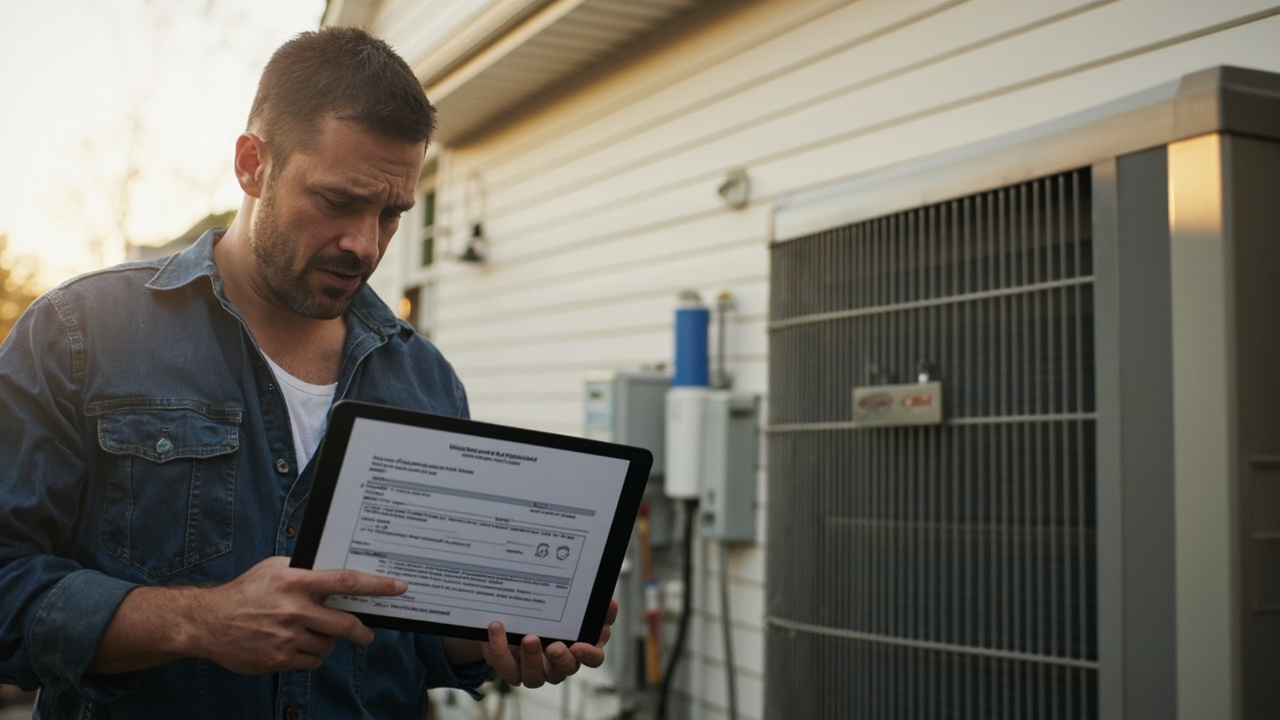
A technician finishes a repair call at a home where the system is 11 years old. The customer is friendly, the tech knows the system history from prior visits, and the timing is obvious: this homeowner should be on a maintenance agreement. But the tech finishes the job, collects payment, and leaves. No mention of the agreement program. No mention of the spring tune-up special. Just a receipt and a goodbye.
Six months later that customer signs with a competitor who sent a reminder postcard.
This is one of three places where maintenance agreement programs quietly bleed money. And unlike a missed call, there is no notification, no alert, and no obvious moment when the loss happens. It just evaporates.
Maintenance agreements are supposed to be the most predictable revenue an HVAC company can have. In practice, most programs operate at about two-thirds efficiency: for every ten agreements that expire, three customers leave, and nobody tracked why. Here are the three places that happens, and exactly what the fix looks like.
Leak One: Expired Agreements Nobody Followed Up On
Every maintenance agreement that expires has a 30 to 60 day window where the customer is still warm. They have been paying for coverage, they have a relationship with your company, and they have a system that still needs service. After that window closes, they mentally move on. They start looking at competitor pricing, they answer the next door-knocker, and the relationship your tech built over two years dissolves in a single decision cycle.
Most contractors do not have a system that alerts them when agreements are expiring. They find out when a customer calls to cancel, or when they pull the report at the end of the quarter and see a cluster of expirations they did not know about. By then the window is closed.
The renewal workflow does not need to be complicated. It needs to be automatic. A 30-day expiration alert, a scripted outreach sequence, a single person accountable for the follow-up call. Most companies that implement this one change see their renewal rate jump from the industry average of 65-70% to 80-85% within the first year.
After an agreement expires, customers are still warm for 30-60 days. After that window, they have mentally moved on. If nobody is tracking expirations and running proactive outreach, you are losing agreement customers every year without knowing it.
Leak Two: Technicians Who Never Asked
Every time a technician is in a customer's home, there is an opportunity to mention the agreement program. The system is on the work order. The customer is engaged. The moment is right. And in most companies, nothing happens.
This is not laziness. It is a tracking and incentive problem. If technicians are not explicitly coached on what to say, not given talking points, and not tracked on agreement conversions, they default to the path of least resistance: finish the job, collect payment, move on.
The fix is not a lecture. It is a system. A simple checklist item on the work order, a five-second talking point, and a tracking metric that shows each tech how many agreements they have personally generated. The operators who run this well see agreement sell-through at every service call become a normal part of the workflow, not an occasional happy accident.
- Most maintenance agreement programs leak money in three places: expired agreements, no ask at service calls, and missed upsell at renewal
- The industry average renewal rate is 65-70%, meaning companies lose roughly a third of their agreement customers every year
- Only 65-70% of HVAC companies have any systematic tracking for agreement expirations
- Every technician visit is a potential agreement sale that most companies are leaving on the table
Leak Three: The Upgrade Path That Never Got Tracked
A customer on a Basic tier agreement who has been with you for three years is a candidate for Standard. A Standard customer who just had an emergency call is a candidate for Premium. These conversations should be happening at renewal time, when the customer is already engaged and the value of the program is fresh in their mind.
In most companies, they are not happening at all, because nobody is tracking tier history, agreement tenure, or customer events that signal readiness for an upgrade. The customer stays on Basic forever, your average revenue per agreement stays flat, and the entire upsell potential of the program quietly sits unused.
A contractor with 200 agreements averaging $400 per year has $80,000 in ARR. If 60% of those customers are Basic tier, moving just 30% of them to Standard tier at $550 per year adds $9,000 in annual recurring revenue without acquiring a single new customer. That is 11% ARR growth from existing accounts.
What the Spreadsheet Breaks Down Looks Like
Running a maintenance agreement program without the right tracking is like driving without a dashboard. The five numbers that matter are: active agreements, agreements expiring in 30 days, renewal rate, annual recurring revenue, and revenue by tier. If you cannot see all five in real time, you are running the program in the dark.
Most companies build their tracking in a spreadsheet. It works until it does not: usually around 50 to 100 agreements, when the manual updates start missing expirations, the tier data becomes inconsistent, and the renewal workflow stops happening on schedule. At that point the program is generating revenue but the leaks are invisible, because nobody has the visibility to see them.
Renewals are handled when someone remembers. Expirations are a surprise quarterly discovery. Tier history is a guess. Upsell opportunities surface only when a customer calls to cancel.
Expiration alerts fire at 30 and 7 days. Renewal workflow starts automatically. Every tech sees their conversion rate. Tier upgrades happen at every renewal because the system surfaces the opportunity.
Building the System That Stops the Leaks
The three leaks are structural, not people problems. You cannot fix them by telling your team to try harder. You fix them by building the system that makes the right action the automatic action.
Automated alerts at 30-day and 7-day expiration marks ensure no renewal window is missed. A defined renewal workflow with a script, a sequence, and an accountable person makes sure each expired agreement gets a follow-up. A tier tracking system that surfaces Basic to Standard and Standard to Premium opportunities at every renewal converts what is currently invisible leakage into measurable revenue growth.
Kortex360 builds these tracking and automation systems for HVAC businesses running maintenance agreement programs. If your program is generating revenue but you cannot see exactly where the leaks are, talk to the team about a pipeline review for your agreement workflow.